The 4 AM Track That Most Tourists Never See
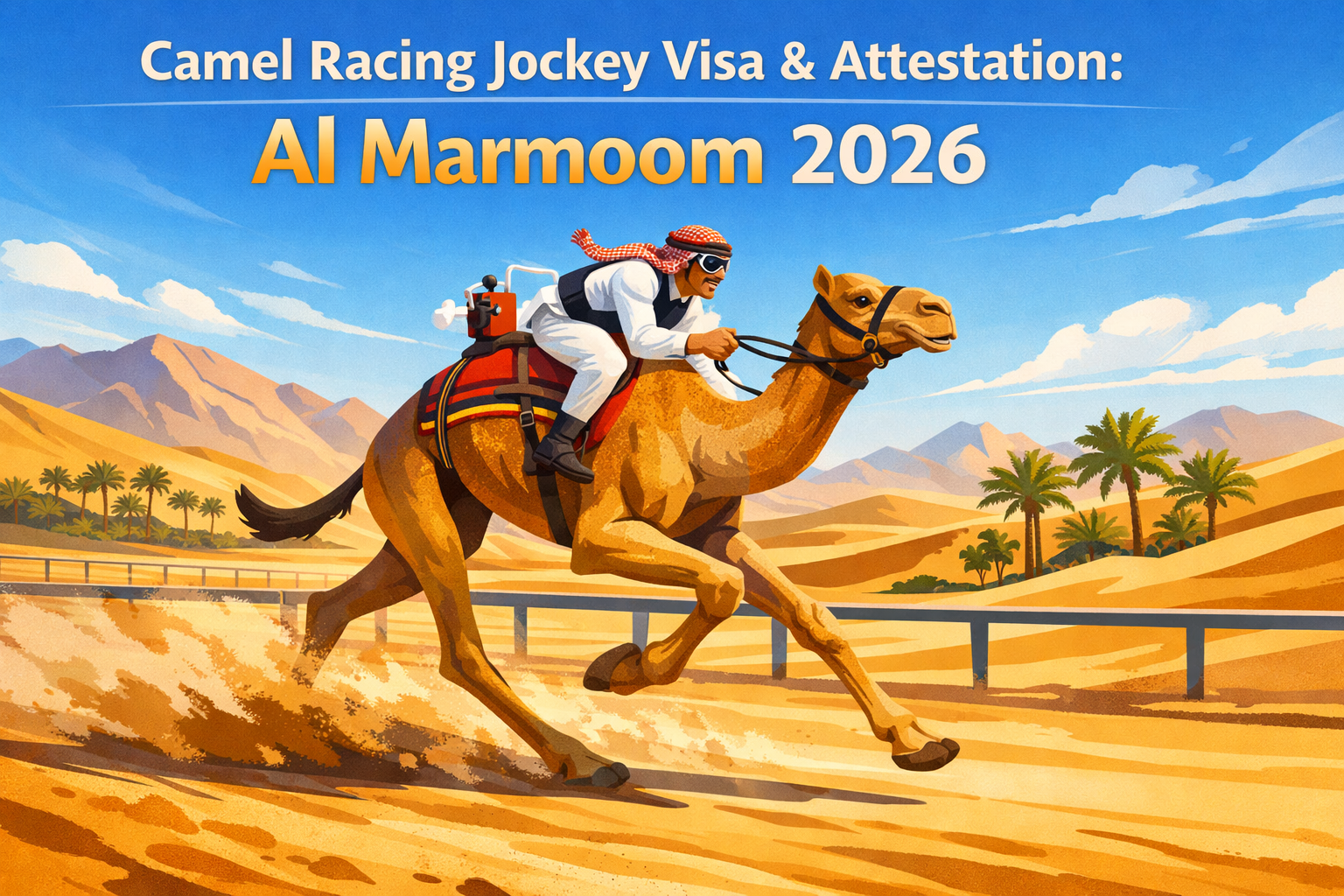
Drive 40 kilometres south of Downtown Dubai before sunrise, past the last petrol station on the Al Qudra road, and you'll find something that looks like it belongs in a different century — except for the white SUVs racing along the sand track, owners glued to handheld radio controls. This is Al Marmoom Heritage Festival, and it's where the UAE's billion-dirham camel racing economy actually lives.
Now, here's what most international visitors don't realise. The jockeys at Al Marmoom aren't waving from grandstands — they're robotic. Since 2005, when the UAE banned child jockeys, lightweight robotic riders strapped to camels have replaced human ones. But the people running the show? Trainers, owners, robot operators, veterinarians, breeders, foreign technical staff, equine and camel-specific physiotherapists, and yes — a small but growing number of international guest jockeys participating in heritage demonstration races and exhibition events. All of them need paperwork. Most of them get it wrong the first time.
If you're planning to participate in the Al Marmoom 2026 season — whether as a camel handler from Sudan, a Pakistani trainer, an Australian veterinarian on contract, a robotic systems engineer from Japan, or a heritage-event demonstration jockey invited by an Emirati owner — this guide is for you. I've spent the last few years watching foreign professionals navigate this peculiar corner of UAE immigration, and the missteps are remarkably consistent.
Let me explain what actually works.
Why Camel Racing Visas Sit in a Category of Their Own
Most UAE visa categories follow a predictable logic. Tourist visa, business visa, employment visa, golden visa. Done. But camel racing operates inside a unique cultural and regulatory space — it's recognised as intangible heritage, governed partly by the Emirates Camel Racing Federation, partly by the Dubai Camel Racing Club, and partly by individual royal stables that operate with significant autonomy.
What that means in practice? Your visa pathway depends heavily on who is sponsoring you and what role you're performing.
Let's break the real-world categories down:
Owner-sponsored short-term entry — If an Emirati owner or stable is bringing you in for a single race weekend, exhibition event, or short training stint, you'll typically enter on a 30 or 60-day visit visa sponsored by the stable, the festival organiser, or a tourism partner. This is the most common route for invited heritage jockeys, international media, and visiting technical specialists.
Employment visa under a registered stable — Trainers, head handlers ("sawaneess\
Tags
Share this article
About This Article
This article was written and published as part of Green Apple Travel & Tourism's blog subscription with HanzWeb. Our AI Blog Platform researches industry keywords, drafts long-form SEO content in the client's brand voice, and publishes after client review and approval. Every article is unique to the subscribing business. Learn about the service →